Maintenance, Upgrades, and Repairs
To ensure the long-term safety of your gas detection system

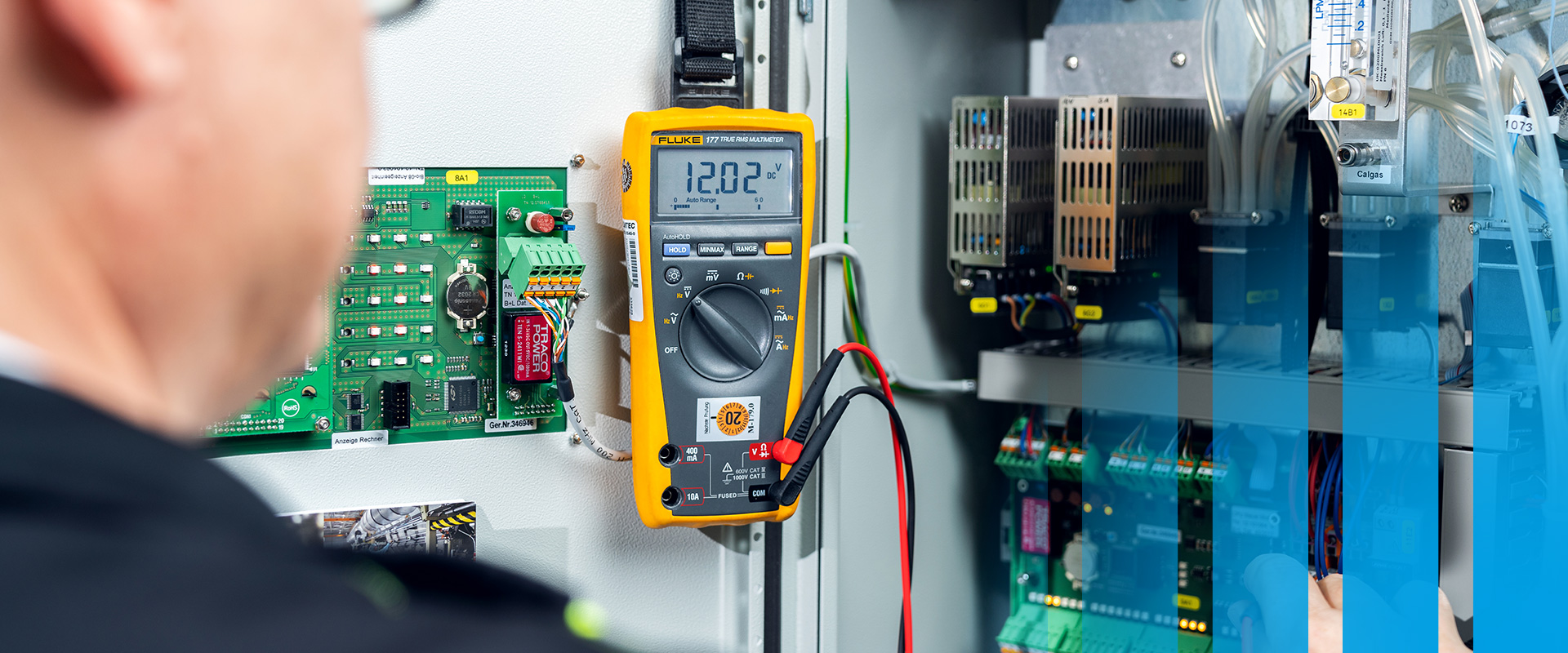
Regular maintenance ensures maximum safety, high availability, and predictable operating costs for your system.
Our Quality:
Bieler+Lang products are designed and manufactured in accordance with the latest guidelines. A high standard of quality ensures that our products have a long service life. This guarantees both the economic and environmental sustainability of your investment in the safety of people, facilities, and the environment.
Maintenance Intervals:
Bieler+Lang products enjoy an excellent reputation. Despite the high quality and durability of our products, which are designed for continuous use, gas detection systems must be regularly inspected, maintained, and calibrated. The inspection intervals depend on many system-specific factors, such as sensor type, the gas being measured, and on-site operating conditions. For gas detection systems, the respective requirements of the risk assessment, as well as the relevant regulations and manufacturer’s specifications, must also be observed.
Sensor Replacement:
Unlike the robust electronics in Bieler+Lang devices, gas detection sensors have a limited service life due to the nature of the technology. The actual service life depends to a large extent on the sensor type and environmental factors such as (other) gases, gas concentrations, temperatures, humidity, contamination, chemicals, and operating time. The service life of sensors varies depending on the measurement principle and application and typically ranges from 2 to over 10 years. A table at the bottom of the page provides a simplified, initial overview of common sensor types, frequent applications (target gases), possible maintenance intervals, and service life.
Our Service Team:
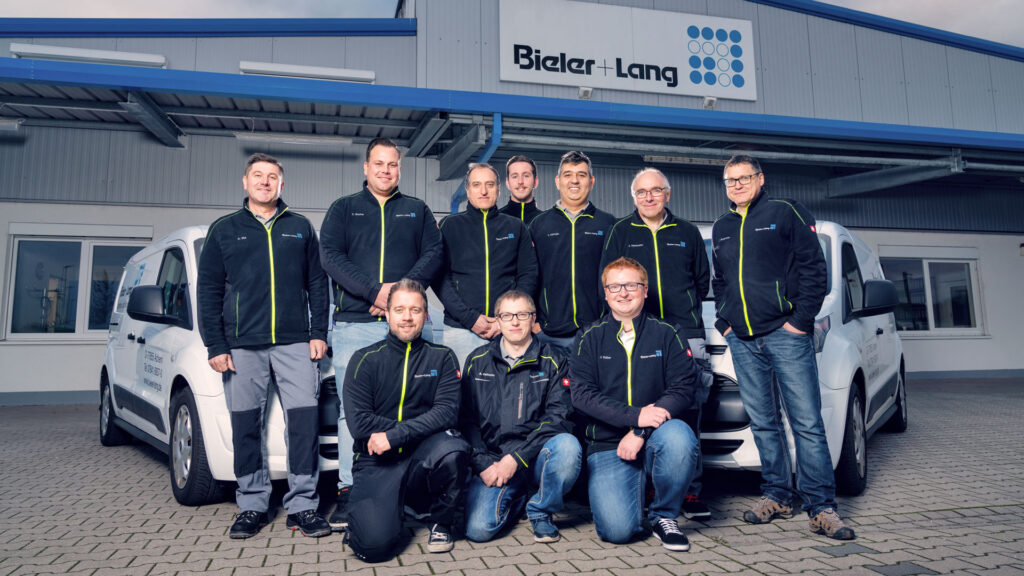
Now for the most important part: Our expert service team and our service partners throughout Germany and Europe are always there for you. Our Bieler+Lang in-house customer service team consists exclusively of certified specialists and provides the following services at your location:
- Installation and commissioning, as well as system-specific
- Maintenance and repairs, all the way through to lifecycle management with
- Upgrades, modernizations, and spare parts supply.
Short response times and quick reactions—especially in emergencies or in the event of malfunctions—are what set our agile service team apart. For maximum safety, high availability, and predictable operating costs for your gas detection system.
Security is not a product—it is a lifecycle.
We therefore invite you to sign a system-specific maintenance contract with us on fair terms. We’d be happy to perform maintenance for you according to the prescribed intervals outlined in the BG RCI T023 (DGUV 213-057) and T021 (DGUV 213-056) technical bulletins. Maintenance services provided by Bieler+Lang are definitely cost-effective for you in the long run. This way, you can be sure that your system will maintain the high level of availability you require.
Custom Maintenance Contract with Bieler+Lang
We would be happy to provide you with a customized quote for the maintenance of your gas detection system. Our factory customer service team also offers project planning, installation, and commissioning of gas detection systems.
Bieler+Lang Premium 24/7 Maintenance Contract
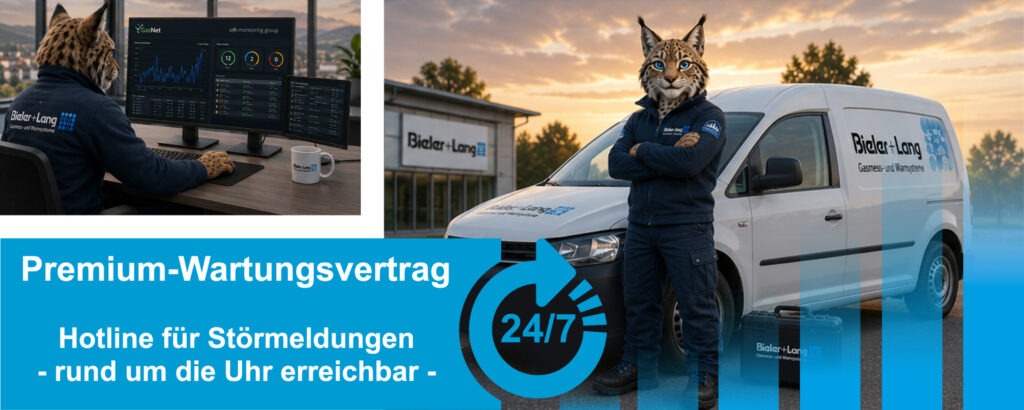
Our premium maintenance contract includes a 24/7 hotline for reporting malfunctions —available around the clock. A special service from Bieler+Lang: For maximum safety, smooth production processes, and high equipment availability. This is how we help prevent unplanned production downtime and the associated financial losses.

Download our maintenance and service brochure
Maintenance and Service Brochure (PDF-German)
What You Should Also Keep in Mind When Performing Maintenance on Gas Detection Systems
Please note that maintenance and repairs on Bieler+Lang gas detection systems may only be performed by factory-certified electricians. This certification must be renewed every two years. This is the only way to ensure that original replacement parts are used for repairs and that the gas detection system continues to function safely.
Our Bieler+Lang Academy regularly offers customized training and continuing education courses in which qualified professionals learn how to safely operate and maintain gas detection equipment and become familiar with the relevant legal requirements. Click the link above to find the upcoming training dates for available modules.
Would you like training for your team of professionals at your location? That’s no problem either—don’t hesitate to send us an inquiry:
Overview of Sensors, Gases, Maintenance and Calibration Intervals, and Service Life
The following table provides a simplified, general overview to serve as an introduction to a complex topic. It is important to clearly distinguish between topics such as sensor service life, calibration/maintenance intervals, and inspections required by law or standards. The maintenance interval and sensor lifespan are therefore not the same thing. A blanket statement such as “replace the sensor every 2 years” is therefore usually incorrect in gas detection technology.
Here are a few real-world examples to illustrate this: While a 5-year lifespan is quite realistic for modern long-life EC sensors—such as our O₂ sensor—pellistor sensors (which operate on the principle of catalytic combustion) can become (such as silicones, sulfur compounds, halogen compounds, or certain solvents) and become unreliable much sooner. Under more favorable operating conditions, however, these “heat-generating sensors” function very reliably for a very long time!
Infrared (IR) sensors, on the other hand, measure without oxygen and are not susceptible to potential catalyst poisoning. They age rather slowly. However, optical contamination, condensation, and dirty filters can affect the measurement. The BG RCI (German Workers’ Compensation Association for Raw Materials and the Chemical Industry), for example, expressly points out that filters must be checked or replaced regularly, depending on operating conditions.
Conclusion: For the reasons stated above, the regulations do not generally require “sensor replacement every X years.”
Instead, the entire gas detection system is tested at regular intervals to ensure it is in good working order.
| Sensor type | Typical service life | Typical Application | Maintenance / Inspection |
|---|---|---|---|
| Electrochemical | 2–3 years | CO, H₂S, SO₂, NO, NO₂, Cl₂, HCl, etc. | Regularly, typically 4–12 months |
| Long-Life EC | up to about 5 years and older | NH₃, CO, H₂S, etc. | typically 6–12 months |
| Pellistor | 2–5 years | CH₄, H₂, C₃H₈, etc. | Regularly, typically 4–12 months |
| IR | 5–10 years and up | CH₄, hydrocarbons, CO₂ | typically 6–12 months |
| ZrO₂ | 5–10 years and up | O₂ | typically 6–12 months |
| PID | 1–3 years* | VOCs | more frequent inspection intervals |
* In particular, the service life of the UV lamp should be taken into account here.
What do German regulations say about maintenance intervals?
For gas detection systems used in Ex-Zones, the DGUV/BG RCI specifies the following maximum distances, for example:
- Visual inspection: monthly
- Functional check: every 4 months
- System inspection: annually
- Records: 3 years
The Exinfo portal provides expertise on hazardous areas from the “Explosion Protection” department of the German BG RCI (Occupational Accident Insurance Association for Raw Materials and the Chemical Industry). You can find in-depth knowledge, up-to-date information, and fact sheets on explosion protection, gas detection systems, and gas detectors here: Exinfo—the BG RCI Explosion Protection Portal.
In Germany, the following applies to toxic gases and oxygen: DGUV Information 213-056 (published by BG RCI as Information Sheet T 021 ) is the authoritative reference. The DGUV (German Social Accident Insurance) is the umbrella organization for statutory accident insurance in Germany and issues rules and guidelines for occupational safety and accident prevention.
For underground parking garages and tunnels, on the other hand, DIN EN 50545-1 is particularly relevant in Germany.
So it’s complicated. But don’t worry:
Bieler+Lang supports you throughout the entire life cycle of your gas detection system. — You can count on it! 24/7 support is also available upon request.