Exhaust gas monitoring in underground parking garages and loading zones.
Gas Detection Systems for Underground Parking Garages: Reliably Monitor Carbon Monoxide (CO), Nitrogen Monoxide (NO), and Nitrogen Dioxide (NO₂) in Accordance with DIN EN 50545-1
Gas Detection Technology in Underground Parking Garages—A Brief Overview:
Air quality in underground parking garages is particularly poor during peak hours. Vehicles entering and exiting the garage, as well as those circulating inside it, release pollutants that can accumulate in enclosed spaces. Without continuous monitoring, critical concentrations can develop unnoticed.
Gas detection systems continuously monitor the concentration of relevant gases such as carbon monoxide (CO), nitric oxide (NO), and nitrogen dioxide (NO₂). The measured values make it possible to control ventilation as needed, issue warnings when necessary, and thus ensure consistently safe operating conditions in the underground parking garage. Depending on the facility’s use, monitoring flammable and explosive gases such as H₂, LPG, and CNG may also be necessary in certain cases.
In most cases, however, it’s about the
- Ensuring air quality through early detection of gas accumulations —that is, before dangerous concentrations develop
- Protection of People (Visitors, Users, Staff, Emergency Responders)
- Automatic ventilation control, barrier control, emergency alarms, etc.—in other words, building management systems and measures
- Legal Certainty for Operators, Municipalities, and Facility Management— Compliance with Standards at Various Levels
- Energy Efficiency of the Entire System
- In certain cases, it can also prevent explosions through the targeted early detection of hazardous gases and mixtures.
Which gases are of concern in underground parking garages?
Various gases and pollutants can be present in enclosed parking garages and underground parking facilities. Depending on the type of vehicle propulsion and how the garage is used, different hazards may arise:
Carbon monoxide (CO) is produced primarily by vehicles with internal combustion engines. This colorless, odorless gas can accumulate rapidly during periods of heavy traffic—especially in areas with high vehicle traffic, at entrances and exits, or in poorly ventilated areas. When inhaled, CO impairs the transport of oxygen in the blood and can be harmful to health even at relatively low concentrations.
In diesel vehicles, nitrogen oxides (NO and NO₂) also play an important role. These can occur particularly in areas with a high concentration of commercial and delivery vehicles. Nitrogen dioxide can irritate the respiratory tract and is therefore a significant factor affecting air quality in enclosed parking areas.
In addition to the standards mentioned below, BG RCI Information Sheet T 021 may also be relevant in Germany under certain circumstances, for example, when monitoring air quality in the workplace, as may be the case in loading zones and loading ramps.
Depending on usage and the vehicle fleet, explosive and flammable gases such as hydrogen (H₂), liquefied petroleum gas (LPG), or compressed natural gas (CNG) may also be relevant. The focus here is not on toxic effects, but specifically on the risk of explosion. LPG is heavier than air and can accumulate in lower-lying areas, while lighter CNG rises and can accumulate under ceilings.
In Germany, the BGRCI Information Sheet T 023 on flammable gases and vapors in the context of ATEX and explosion protection may also be relevant when designing such gas detection systems; we discuss this in more detail in other sections of this website.
Important: A comprehensive safety plan must therefore always take into account the relevant hazards and local conditions.
Regulations for Gas Detection and Ventilation in German Underground Parking Garages
In Germany, various sets of regulations interact in the planning and operation of underground parking garages. It is important to distinguish between building code requirements, technical design rules, and product standards for gas detection systems.
The basis for this is the respective state building code. Germany has 16 state building codes that define the basic requirements for buildings—for example, with regard to safety, fire protection, and health protection.
For garages, these requirements are specified in the respective state regulations governing garages or garages and parking spaces. However, there are not 16 separate garage regulations: 14 states have their own regulations governing garages or garages and parking spaces. In Berlin and North Rhine-Westphalia, the relevant regulations are incorporated into other ordinances.
The garage regulations include, among other things, requirements for ventilation, fire protection, escape routes, and the operation of medium- and large-scale garages. For example, the North Rhine-Westphalia Special Building Code stipulates requirements for garage ventilation and CO alarm systems.
The VDI 2053 standard is of particular importance for the technical planning and design of ventilation systems. It outlines the technical principles for garage ventilation and assists planners and system installers in designing appropriate ventilation systems. In doing so, it is always necessary to ensure compliance with the applicable state regulations.
Finally, DIN EN 50545-1 applies to the gas detection systems used. It defines performance requirements and test procedures for stationary devices designed to detect and measure carbon monoxide (CO), nitric oxide (NO), and nitrogen dioxide (NO₂) in underground parking garages and tunnels. Among other things, these devices can be used to control ventilation systems or to warn of a risk of poisoning.
In simple terms, the following applies in Germany:
State Building Code / Building Regulations
→ defines the basic requirements for buildings
The Garage Ordinance and corresponding state regulations
→ specify these requirements for garages, for example regarding ventilation, fire safety, and emergency exits
VDI 2053
→ describes the technical principles for planning and designing garage ventilation
DIN EN 50545-1
→ defines requirements for gas detectors for CO, NO, and NO₂ in underground parking garages and tunnels
In short:
Building codes define the basic requirements. State regulations regarding garages specify these requirements for garages. VDI 2053 describes the technical design of the ventilation system. DIN EN 50545-1 defines the requirements for the gas detection systems used for this purpose.
Regulations and technical standards should always be considered in their most current versions and in the context of specific local conditions.
How does gas detection technology work in underground parking garages?
Gas detection systems operate continuously and monitor air quality in various areas of the underground parking garage. Rather than waiting until a situation has already become critical, they detect rising gas concentrations early on and enable an automatic response.
Typically, the process consists of four steps:
1. Measurement
Gas detectors continuously monitor the concentration of relevant gases within their respective monitoring areas.
2. Transmission
The measured values are transmitted to a central processing unit.
3. Analyze
The measured values are compared with the defined alarm and switching thresholds.
4. Response
When concentrations reach certain levels, ventilation systems, warning indicators, or other safety features can be activated automatically.
By combining continuous monitoring with automated control, operators can respond quickly to changes in air quality.
The Right Sensor Technology for Every Application
Different gases require different measurement methods. Electrochemical sensors are used in particular for toxic gases such as CO, NO, and NO₂. They generate an electrical signal that is proportional to the concentration of the target gas, thereby enabling precise and continuous monitoring.
In the specific case of detecting flammable and explosive gases such as hydrogen, LPG, or CNG, different measurement methods are used depending on the application, such as catalytic sensors or infrared technology.
In addition to the appropriate sensor technology, it is also crucial to position the gas detectors correctly, taking into account the properties of the specific gas and local conditions.
Demand-Based Ventilation Control: Combining Safety and Energy Efficiency
Reliable ventilation is crucial for good air quality in enclosed underground parking garages. At the same time, the continuous operation of large ventilation systems results in significant energy costs. Demand-controlled ventilation can make an important contribution to energy efficiency in this context. The gas detection system continuously provides up-to-date measurement data and allows the ventilation capacity to be adjusted to the actual load.
For example, if CO concentrations rise in a specific area of a garage during a period of heavy traffic, the ventilation system can respond specifically to the affected areas. As soon as the concentrations drop again, the ventilation output can be reduced accordingly. This allows for a combination of safety, air quality, and efficient system operation.

SafePark by Bieler+Lang: Gas Detection and Ventilation Control from a Single Source
A modern gas detection system should integrate seamlessly into the technical systems of an underground parking garage. With the SafePark product family from Bieler+Lang, you can monitor relevant pollutants, implement ventilation strategies, and centrally record measurement values, alarms, and system status.
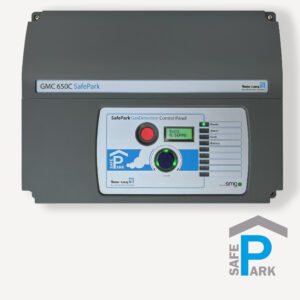
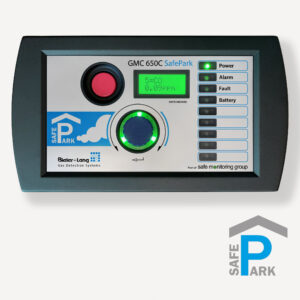
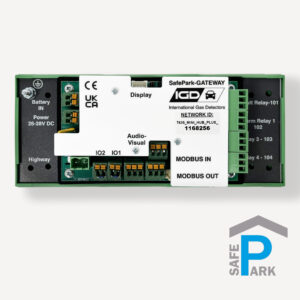
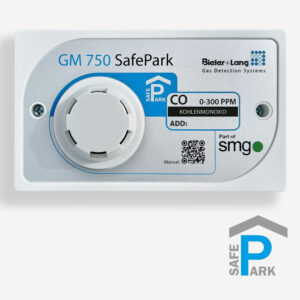
The GM 750 SafePark gas detectors enable the monitoring of CO, NO, and NO₂. The SafePark GATEWAY controllers enable integration into ventilation and building management systems, including via Modbus and BACnet. When used in conjunction with the GMC 650C SafePark HMI, operators and service personnel gain a centralized overview of measurement values, alarms, and system status.
The GMC 650C SafePark, on the other hand, combines a controller and a control panel into a modern controller housed in a compact enclosure designed for space-saving wall mounting.
With SafePark BUS technology, up to 128 measurement points and auxiliary devices can be integrated into a single digital system.
SafePark thus provides a powerful foundation for monitoring air quality and controlling ventilation in underground parking garages based on actual needs.
Are you planning a gas detection system for an underground parking garage?
Whether it’s a new construction, a renovation, or an expansion: The requirements for gas detection and ventilation always depend on the specific application, the size of the garage, local conditions, and the applicable regulations and technical standards.
Bieler+Lang supports planners, system integrators, and operators in selecting and implementing suitable gas detection solutions for underground parking garages. Talk to our team about your project and learn more about the SafePark solutions for underground parking garages and parking structures.
The SafePark Solution from Bieler+Lang
SafePark – The intelligent gas warning system for parking garages and underground garages
In 2026, Bieler+Lang will introduce a new digital system designed specifically for monitoring hazardous and toxic gases in parking garages and underground parking facilities. The system enables the reliable detection of vehicle exhaust gases that are harmful to health:
- Carbon monoxide (CO)
- Nitrogen dioxide (NO₂)
- Nitric oxide (NO)
Bieler+Lang SafePark devices are distinguished by modern, reliable measurement methods, all standard interfaces for controlling ventilation systems and warning systems, and innovative 2-wire bus technology. The result is not only standard-compliant monitoring and operation of your system in accordance with EN 50545-1:2011 + A1:2016 and EN 50271:2018, but also a wide range of cost-saving opportunities during operation, installation, and service of your new gas detection system in non-hazardous areas.



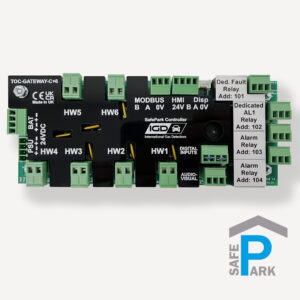
SafePark is based on high-performance digital 2-wire bus technology. This allows for the efficient monitoring of large parking areas while reducing installation and maintenance costs. The addressable gas detectors communicate with central controllers and enable:
- Simple project planning
- Fast commissioning
- Convenient remote monitoring
- Intuitive system configuration
- Flexible expandability
A wide range of accessories is available for the SafePark series, including:
- Horns and warning lights
- Emergency power supply
- Extension modules
- Further BUS-capable sensors
Typical applications for SafePark:
- Underground garages
- Parking garages
- Parking decks
- Tunnel
- Loading zones
- private parking garages
- Areas with high vehicle or diesel pollution
Benefits of the SafePark Series at a Glance
- Compliant with EN 50545-1 and EN 50271
- Digital BUS gas warning system
- Addressable sensors
- Simple cabling
- Quick installation
- Intuitive operation
- Reduced maintenance costs
- Robust industrial design
- Durable sensor technology
- Optimum integration into modern building technology
Conclusion on Smart Gas Monitoring for Enclosed Parking Facilities: Our gas detection systems are specifically designed for use in parking garages and underground parking facilities. They operate reliably, accurately, and in compliance with standards —and can often be seamlessly integrated into existing building management systems.
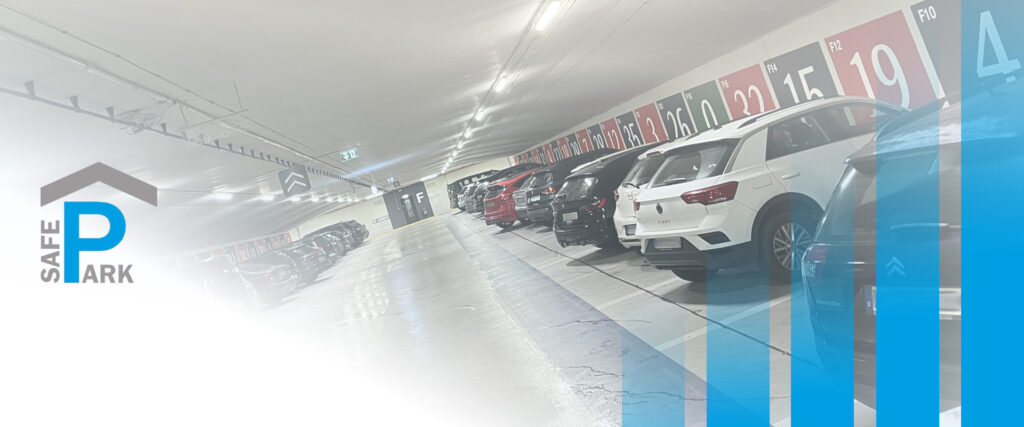
Traditionally reliable and proven over decades: Many Bieler+Lang gas detectors have earned a solid reputation in parking garages and underground parking facilities.
Bieler+Lang’s extensive product line has traditionally included a wide selection of detectors and controllers for monitoring hazardous exhaust gases in garages, underground parking garages, parking structures, and tunnels.
In addition to the standard-compliant monitoring of typical toxic parking garage exhaust gases such as carbon monoxide CO, nitrogen monoxide NO and nitrogen dioxide NO₂ numerous gas warning devices and measuring systems are also available for monitoring other, often highly explosive gases such as Hydrogen H₂ (e.g. for battery monitoring in electric vehicles), the typical car and liquefied petroleum gas LPG (important component: Propane C₃H₈), and other toxic and explosive gases.
Our technical sales team or service partners will work with you to tailor each gas detection system specifically to the needs of your building and the specific hazards present. Get a no-obligation consultation now!
Our Bieler+Lang Quality Standards
Bieler+Lang products and the new SafePark series represent durable, robust, and low-maintenance gas detection technology “Made in Germany”—designed for professional, continuous use in parking garages and underground parking facilities.